


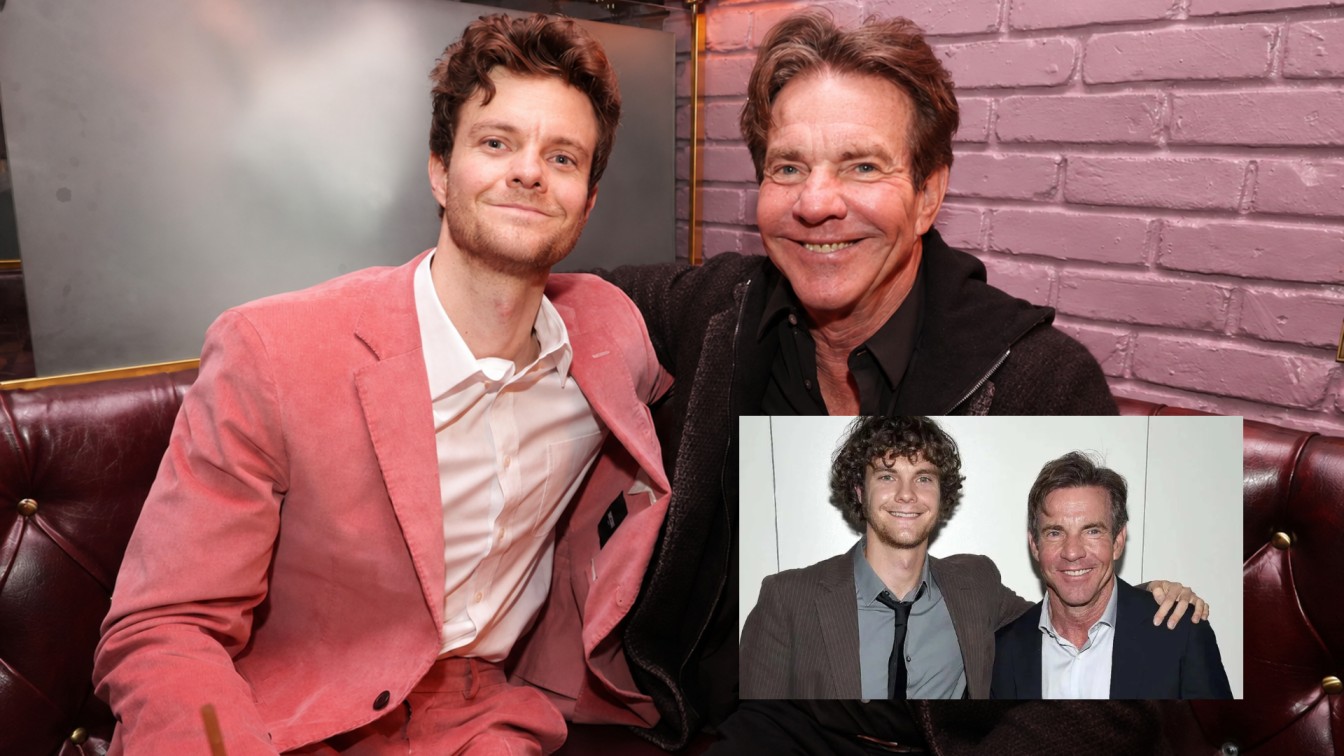
Being born into a famous family can be both a blessing and a challenge. For Thomas Boone Quaid — the son of renowned actor Dennis Quaid and Kimberly Buffington — that reality arrived almost immediately. His story is one that blends Hollywood, vulnerability, family resilience, and the quiet strength it takes to grow up in the public eye with privacy and dignity.
| Name | Thomas Boone Quaid |
|---|---|
| Date of Birth | November 8, 2007 |
| Age | 18 years |
| Birthplace | Santa Monica, California |
| Nationality | American |
| Zodiac Sign | Scorpio |
| Parents | Dennis Quaid & Kimberly Buffington |
| Siblings | Twin: Zoe Grace, Half-brother: Jack Quaid |
| Ethnicity | Caucasian / Mixed |
| Early Life | Survived neonatal medical overdose |
| Public Profile | Private life, no media career |
| Lifestyle | Focused on family and normal upbringing |
A Childhood Framed by Family
Thomas Boone Quaid entered the world on November 8, 2007, as one half of a pair of fraternal twins born to Dennis Quaid and Kimberly Buffington via a gestational surrogate. His twin sister, Zoe Grace, arrived just minutes after him, completing a joyful expansion of a closely knit family. This moment marked a new chapter for Dennis — already a father to his older son Jack Quaid from his earlier marriage — as he embraced parenthood again with deep gratitude.
Growing up in a home influenced by creativity, care, and a blend of Hollywood work and family life, Thomas was surrounded by adults who understood both the spotlight and the simple pleasures of raising children. Yet even in those earliest days, life presented an early test that would come to shape how his family understood both vulnerability and advocacy.
The First Test: A Critical Medical Error
When Thomas and Zoe were just about 10 to 11 days old, the family faced a frightening crisis. The twins were hospitalized at a Los Angeles hospital for treatment of a staph infection. Both infants were mistakenly given an overdose of the anticoagulant drug heparin — at a dosage roughly 1,000 times higher than what infants should receive.
The error occurred because heparin vials containing adult-strength doses were stored where the pediatric version should have been. Nurses administered the incorrect concentration, which led to dangerous bleeding in the twins.
For any parent, the idea of a medical mistake is terrifying. For Dennis and Kimberly, this was thrust into the public sphere. The hospital acknowledged the incident as a “preventable error”, apologizing to the family and noting that rigorous evaluations followed. Fortunately, both infants were treated with an antidote and other stabilizing care and ultimately recovered without known long‑term harm.
From Crisis to Advocacy
The experience with Thomas and Zoe’s overdose didn’t just scare the Quaid family — it transformed them. Dennis and Kimberly discovered that medication errors in hospitals are far more common than most people realize, and that such incidents can have devastating consequences for patients of all ages.
In response, they helped establish a foundation dedicated to reducing preventable medical errors and advocating for safer healthcare practices. Dennis Quaid even testified before the U.S. House Committee, urging policymakers to protect patients’ rights and improve hospital safety protocols.
This shift from actor to advocate was not about notoriety but about ensuring that no other family would face the same nightmare. In interviews following the incident, Dennis spoke openly about how the ordeal changed his perspective on life, parenting, and how deeply he valued the small moments of everyday family life.
Growing Up Away from the Spotlight
Despite the intense media attention surrounding his infancy, Thomas’s life after those early weeks has been remarkably private. Unlike many celebrity children whose daily activities become fodder for tabloids or social media, Thomas and his twin sister have been largely shielded from public scrutiny.
Their parents have deliberately prioritized a sense of normalcy — from attending school to sharing ordinary family routines that rarely make headlines. This approach reflects a conscious choice by the Quaids: to allow their children to grow up grounded, curious, and secure in their identity outside of celebrity fame.
This emphasis on privacy doesn’t indicate a lack of accomplishment or experience; rather, it suggests a profound respect for Thomas’s personal journey and development. He’s been given space to explore his interests away from constant public appraisal.
The Influence of Family and Siblings
Being a twin can deepen a child’s sense of companionship and identity. For Thomas and Zoe Grace, that bond has likely been a source of comfort and shared adventure from infancy onward. Twins often share an intuitive closeness, and in their case, that connection may have been strengthened by facing health adversity so early.
Meanwhile, having an older half‑brother, Jack Quaid — an actor in his own right — provides another layer of familial influence. Jack’s experiences in the entertainment world, combined with his decision to pursue a career while maintaining a relatively balanced profile, may have offered Thomas a model for balancing ambition with privacy.
Family dynamics like these can be subtle but powerful, shaping how a young person understands ambition, creativity, resilience, and emotional support. For Thomas, growing up in such an environment likely cultivated both empathy and confidence in navigating life’s complexities.
What Media Coverage Has Focused On
Over the years, the most consistent public reporting about Thomas has centered on a handful of themes:
- The early medical crisis and its implications for hospital safety.
- The Quaid family’s advocacy work to prevent medical mistakes.
- Occasional reflections by Dennis Quaid on how fatherhood has shaped his identity.
Beyond these points, there is no reliable public documentation of specific milestones — such as high school activities, artistic pursuits, or other personal undertakings — related to Thomas himself. This gap in public knowledge isn’t a sign of nothingness; it’s evidence of the family’s intentional protection of his private life amid public interest.
The Hidden Strength in Ordinary Moments
In many ways, Thomas Boone Quaid’s life story is a quiet testament to the resilience that often goes unseen. He was welcomed into the world under extraordinary circumstances, faced peril early, and emerged into childhood with the steadfast support of a loving family. What he does with that foundation is his own — and so far, much of it remains private, unchronicled on screens or websites.
That privacy, in itself, is notable. It reflects a conscious choice by his family to let him grow up rooted in relationships and experiences that matter most — not in moments curated for public consumption.
In that sense, Thomas’s story resonates not because he is a celebrity’s child, but because he embodies something profoundly human: the desire to be known for who you are, not just what the world projects onto you.
Conclusion
Thomas Boone Quaid represents a generation of children born into fame yet raised with intention. His early life — marked by love, medical trial, and family advocacy — provides a narrative that is at once extraordinary and deeply relatable. While much about his personal life remains out of the spotlight, the values reflected in his upbringing — resilience, family closeness, and quiet strength — offer a meaningful portrait of what it means to grow up within a famous family yet stay grounded in what truly matters.
As readers, we can appreciate both the public chapters that have been shared and the private ones that Thomas will write for himself in the years to come.
