


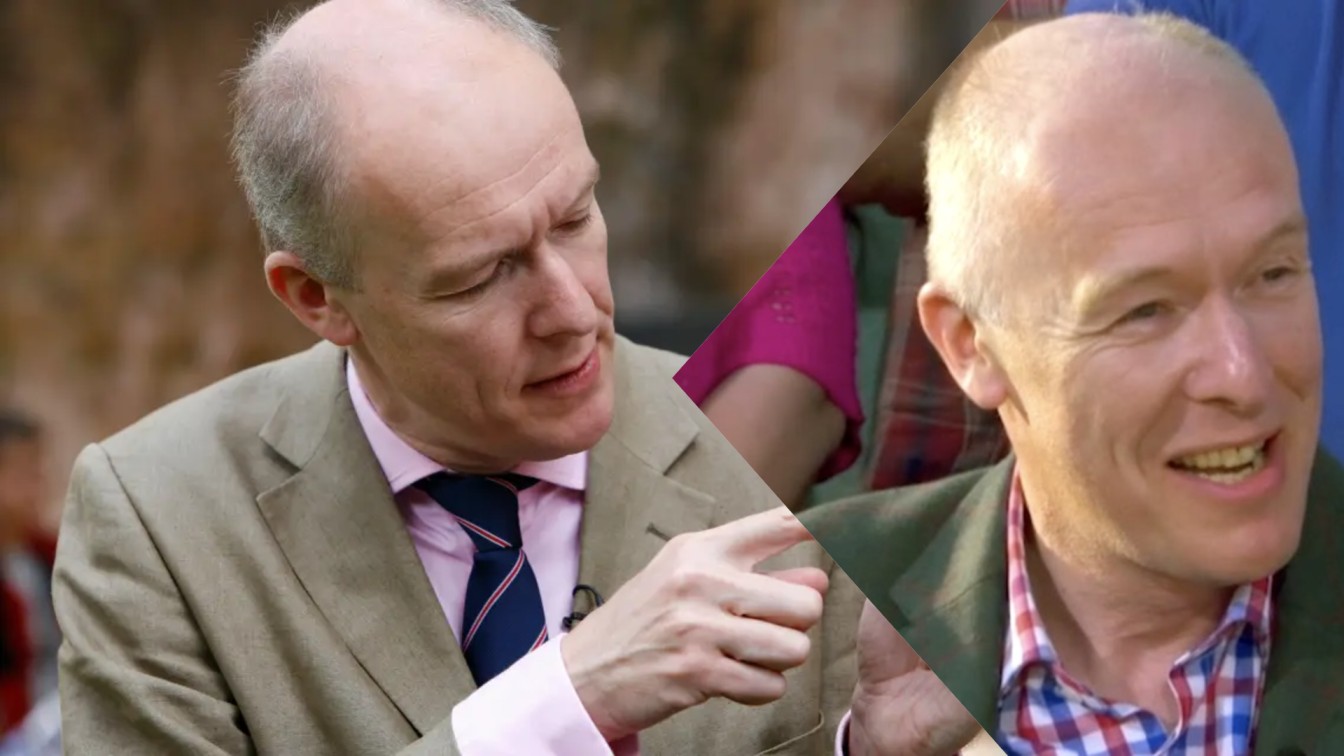
Fergus Gambon may not be a household name in everyone’s living room, but to those who cherish history, memory, and the tangible beauty of the past, his work resonates deeply. In a world that often prizes the new and the flashy, Gambon’s expertise reminds us that value is as much emotional and cultural as it is financial. He is the expert who stands quietly at the intersection of art, history, and personal story — helping people uncover the hidden worth and meaning in their heirlooms.
| Born | 1964 |
|---|---|
| Nationality | British |
| Father | Sir Michael Gambon |
| Mother | Anne Miller |
| Siblings | None (only child) |
| Profession | Antiques Expert |
| Specialization | Ceramics, Porcelain, Glass |
| Auction House | Bonhams |
| Position | Director, British Ceramics & Glass |
| TV Role | Antiques Roadshow Expert |
| Notable Work | Catalogued major collections, Public Lectures |
| Public Image | Private, professional, approachable |
Born into a world where artistic creativity was valued, Gambon’s early life laid the foundation for what would become a lifetime pursuit of history through objects. He was born in 1964, the only child of celebrated British actor Sir Michael Gambon and mathematician Anne Miller. Though his father’s work on stage and screen brought national — even global — fame, Fergus charted a very different direction for his own life. Growing up amid discussions of culture and craft, he developed a curiosity not for performance but for the subtle language of material objects and the stories they carry.
His childhood was largely spent in the English countryside, where the slow rhythms of rural life allowed him space not just to observe objects, but to wonder about their origins and journeys. In a household that balanced intellect and artistic sensibilities, this curiosity was not discouraged; it was cultivated. These early experiences shaped his lifelong passion for ceramics, glass, and the broader domain of decorative arts.
Forging a Career at Bonhams
After completing his education — the details of which remain private, consistent with his later preference for discretion — Gambon entered the professional world of art and antiques. In 1994, he joined Bonhams Fine Art Auctioneers & Valuers in London, one of the world’s most respected auction houses.
From the beginning, his work focused on ceramics, porcelain, and glass — objects that demand not just an eye for detail, but significant contextual knowledge. Over time, he became recognized as one of the world’s leading authorities, especially in the realm of Welsh ceramics and British pottery from the 15th through 19th centuries.
His rise at Bonhams was steady and deserved. In 2019 he was appointed Head of the British Ceramics and Glass Department, and in 2023 he became Director of that department. These roles are not honorary titles; they speak to the responsibility he carries — from researching and cataloging historic collections to curating auctions that bring remarkable objects to the world market. Among the landmark sales he has overseen are the Watney, Pinewood, Minton Museum, Billie Pain, and Zorensky collections — each a testament to the depth of his scholarship and his meticulous approach to provenance, condition, and narrative.
What sets Gambon apart in the auction world isn’t simply his ability to assign a market value to an object, but his talent for decoding history — revealing why pieces matter, not just what they cost.
A Familiar Face on Antiques Roadshow
To many in the UK and beyond, Fergus Gambon’s voice and presence are familiar through another venue: the BBC’s long-running television series Antiques Roadshow.
Launched by the BBC in 1979, Antiques Roadshow invites the public to bring personal items to be evaluated by specialists. While the format remains deceptively simple — people, items, stories, and expert insights — the program’s appeal lies in its ability to fuse personal memory with cultural history. Gambon’s appearances on the show have made him one of the ceramics and glass experts audiences look forward to seeing.
What makes his contributions so compelling is not only his remarkable knowledge — accumulated through decades of study and hands-on experience — but his empathetic engagement with the owners who bring their cherished possessions. He listens intently, asks thoughtful questions, and then places the object in a broader context of design, craft, and social history. In so doing, he often reveals layers of meaning that the owner may never have imagined.
One episode that captured public admiration involved a 300-year-old dolls’ house found on Antiques Roadshow. What made this moment memorable wasn’t just the astonishing estimated valuation of upwards of £150,000–£200,000 but Gambon’s emotional reaction. He spoke not in detached expertise, but with genuine wonder and deep reverence for the craftsmanship and preservation of an object that had survived the centuries in such remarkable condition. His response underscored the world of antiques as one where history and humanity converge.
Expertise Rooted in Scholarship and Sensitivity
Across both his auction work and television appearances, Gambon’s expertise shines through several defining qualities:
1. Historical Insight: Unlike purely commercial appraisers, his evaluations begin with a narrative — where something came from, who might have made it, and what it once meant to its original owner.
2. Technical Mastery: Ceramics and glass require specialized knowledge — from understanding how glazes were made in different eras to recognizing regional production styles and kiln techniques. Gambon’s fluency in this language reflects years of dedicated study.
3. Accessibility: He speaks in a way that is comprehensible without being simplistic — bridging scholarly depth and public engagement, a rare combination in any expert field.
4. Emotional Intelligence: His comments reveal an appreciation for the emotional connections that people have with heirlooms — whether they carry family lore, aesthetic pleasure, or just the quiet memories of everyday life.
This blend of technical knowledge and human sensitivity makes Gambon particularly adept at connecting people with the stories behind their treasures — the very mission he embodies.
The Man Behind the Expertise
Despite his public presence, Fergus Gambon has maintained a level of privacy that is increasingly uncommon among public figures. Unlike many in television or media who curate their personal lives for public consumption, Gambon has chosen not to broadcast details such as marital status or family life. What is clear from the available information is that he lives a life focused on his work — a career defined by scholarly engagement rather than publicity.
The fact that he has kept personal details private speaks less to secrecy and more to a professional ethos that honors expertise over personality. In an age when visibility often trumpets value, his quiet dedication underscores an important truth: substance has its own enduring presence.
Connecting Objects to Meaning
One of the most profound aspects of Gambon’s work is his ability to show that heirlooms are not just objects — they are stories in material form. A simple ceramic jug can be a bridge to a distant era; a glass vase can embody social customs long forgotten; a 300-year-old toy can become a window into family lineage and cultural practice. He doesn’t view antiques as static relics but as touchstones that connect us to those who came before.
In this sense, his work goes beyond valuation. It invites owners — and viewers — to rethink what they hold in their hands. Instead of seeing a faded teacup, we are encouraged to recognize a companion to countless breakfasts in Victorian kitchens. Instead of a chipped vase, we find a testament to artistic ingenuity and cultural exchange. These connections turn possessions into heirlooms worthy of curiosity and respect.
Legacy and Influence
For many, Gambon will be remembered not just as an antiques expert but as someone who elevated his field by emphasizing its human dimension. His career at Bonhams and his contributions to Antiques Roadshow have brought a deeper public appreciation for ceramics and glass — art forms that might otherwise be overlooked in favor of paintings, sculpture, or jewelry.
Collectors, museum professionals, and lay enthusiasts alike admire him for his integrity, depth of knowledge, and his ability to convey the ongoing relevance of historical objects. Because of him, countless families have walked away from an appraisal with not just a number in hand, but a richer understanding of what their heirloom means and why it matters.
FAQs
Q1: Who is Fergus Gambon?
Fergus Gambon is a British antiques expert specializing in ceramics, porcelain, and glass. He works at Bonhams and appears on Antiques Roadshow.
Q2: What makes Fergus Gambon unique in his field?
He combines deep historical knowledge with empathy, connecting people to the stories behind their heirlooms.
Q3: Is Fergus Gambon related to Michael Gambon?
Yes, Fergus is the son of Sir Michael Gambon, the acclaimed actor.
Q4: What types of antiques does he specialize in?
His focus is on British pottery, porcelain, Welsh ceramics, historic glass, and decorative arts.
Q5: Can the public meet Fergus Gambon?
He is accessible mainly through Antiques Roadshow, lectures, and public auction events, though he maintains a private personal life.
A Portrait of Quiet Excellence
Fergus Gambon’s journey is neither dramatic nor sensational, but it is deeply inspiring. It’s the story of a man who chose a path rooted in curiosity, disciplined study, and respect for the tangible threads of human history. He helps us see that objects are not inert; they are carriers of story, memory, and heritage.
In a world rushing toward the new, his work encourages us to look backward — not out of nostalgia but out of reverence. He reminds us that the objects we inherit are not just possessions; they are living connections to people, places, and eras that have shaped who we are today.
And perhaps that is his greatest contribution: showing us that heirlooms are more than things — they are chapters in the ongoing human story.
